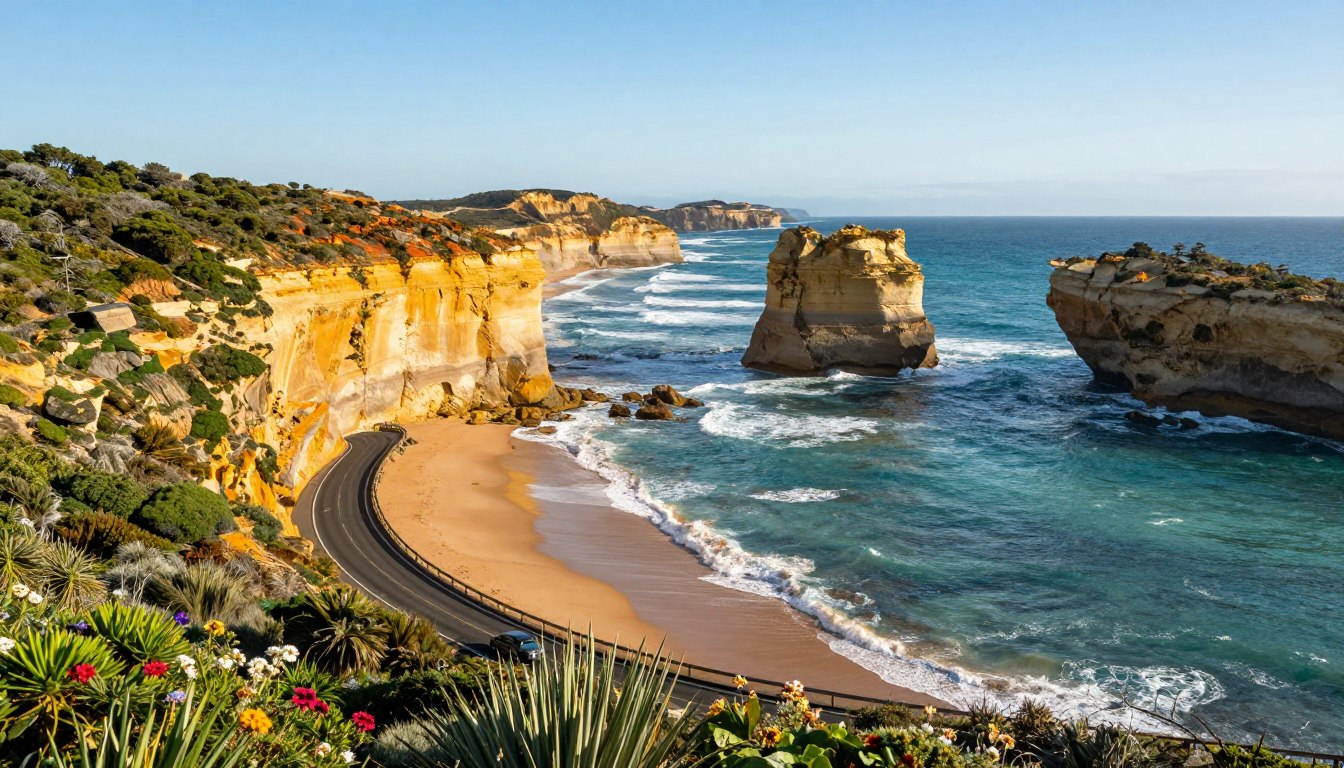
Imagine driving along a rugged coastline where sapphire water meets golden limestone cliffs. Stretching 243km from Torquay to Allansford, this famous path provides amazing views. It stands out among Australian coastal drives for its raw beauty and charming seaside towns.
You can dive into the local food scene or explore the rich history of the Shipwreck Coast. Whether you want a quick day trip or a leisurely five-day tour, our tried and tested Great Ocean Road trip planning helps you see the best spots.
From lush rainforests to iconic landmarks, every mile offers something unique and memorable. You will love the blend of nature and vibrant local culture found on this journey.
Key Takeaways
- Start in Torquay to stay on the seaside lane for the best views.
- Visit the 12 Apostles during the golden hour for perfect photos.
- Wander through the Otway rainforest to find hidden waterfalls.
- Discover the maritime history of sleepy fishing villages along the coast.
- Plan for three to five days to enjoy a relaxed and steady pace.
- Keep an eye out for wild koalas in the eucalyptus trees.
Planning Your Great Ocean Road Adventure
Your Great Ocean Road journey is more than just a drive; it’s an adventure that deserves thoughtful preparation. To make the most of your trip, consider the time of year you plan to visit, how many days you’ll need to complete your journey, and the best transportation options for your needs.
Best Time to Visit the Great Ocean Road
The Great Ocean Road is a year-round destination, but the best time to visit depends on your preferences. Summer (December to February) is peak tourist season, with warm weather ideal for surfing and outdoor activities. If you prefer milder weather and fewer crowds, consider visiting during spring (September to November) or autumn (March to May). Winters can be cool and wet, but it’s a great time to enjoy the region’s natural beauty without the crowds.
- Summer: Warm weather, ideal for surfing and outdoor activities.
- Spring and Autumn: Mild weather, fewer crowds.
- Winter: Cool and wet, but fewer tourists and lush landscapes.
How Long You’ll Need for Your Journey
An ideal Melbourne to Warrnambool itinerary spans four to five days, allowing you to explore the region’s highlights without feeling rushed. However, if you have more time, you can delve deeper into the local culture, history, and natural beauty. The drive from Melbourne to Warrnambool takes around 3.5 hours, but with so many attractions along the way, you’ll want to allocate sufficient time to enjoy the scenic views, beaches, and towns.
Here are some key stops to consider including in your itinerary:
- Torquay: Known for its surf culture and as the starting point of the Great Ocean Road.
- Lorne: A charming coastal town with a variety of dining and accommodation options.
- Apollo Bay: A great base for exploring the Otway Ranges and enjoying local seafood.
- The Twelve Apostles: One of the region’s most iconic natural attractions.
Transportation Options and Vehicle Recommendations
Choosing the right vehicle for your Great Ocean Road adventure is crucial. If you’re planning to surfing in Australia, you’ll need a vehicle with enough space for your surfboard. Many travelers opt to rent a car, as it provides the flexibility to stop at attractions along the way. Consider renting a vehicle with good fuel efficiency and comfortable seating for your group size.
Here are some transportation options to consider:
| Transportation Option | Advantages |
|---|---|
| Renting a Car | Flexibility to create your own itinerary, space for surfboards or luggage. |
| Tour Buses | Convenient, guided tours that cover major attractions. |
| Public Transport | Eco-friendly, budget-friendly, but may limit your flexibility. |
Understanding the Great Ocean Road’s Rich History
The Great Ocean Road is a testament to the region’s complex past, from its indigenous roots to its role in shaping modern Australia. As you drive along this iconic route, you’re not just taking in the breathtaking views; you’re also traversing a path steeped in history.
The Great Ocean Road is also known as the world’s largest war memorial, built by returned servicemen between 1919 and 1932 to honor Australia’s fallen soldiers. This monumental task was undertaken to commemorate the sacrifices made during World War I, and it stands as a powerful reminder of the region’s history.
The Story Behind Australia’s Greatest War Memorial
The construction of the Great Ocean Road was a labor of love and dedication by the returned servicemen who built it. This monumental task not only provided them with employment but also served as a tribute to their fallen comrades. The road is a significant war memorial, symbolizing the sacrifices made during World War I.
Some key facts about the Great Ocean Road as a war memorial include:
- It was built between 1919 and 1932.
- The construction was undertaken by returned servicemen.
- It was officially opened on November 26, 1932.
Indigenous Heritage and the Wadawurrung People
The region through which the Great Ocean Road passes is rich in indigenous history, being the traditional lands of the Wadawurrung people. The Wadawurrung have a deep connection to this land, with stories, songs, and dances that have been passed down through generations.
Key aspects of Wadawurrung culture include:
- Their traditional connection to the land and its features.
- Their stories and legends that explain the creation of the region’s landscapes.
- Their ongoing cultural practices and connection to the region.

How the Road Shaped Coastal Communities
The construction of the Great Ocean Road had a profound impact on the coastal communities along the route. It not only opened up the region to tourism but also connected previously isolated towns and villages.
The road’s impact can be seen in several areas:
- Economic growth: The road brought new economic opportunities to the region, primarily through tourism.
- Community development: It facilitated the growth of towns and the development of infrastructure.
- Cultural exchange: The road enabled easier access to the region, promoting cultural exchange between visitors and local communities.
Starting Point: Melbourne to Torquay
Your Great Ocean Road journey kicks off with a leisurely drive from Melbourne to Torquay, where the spirit of Australian surfing comes alive. As you leave the city’s bustle behind, the scenic route unwinds through picturesque landscapes, setting the tone for an unforgettable adventure.
Getting Out of Melbourne
Leaving Melbourne, you’ll head southwest on the Princes Highway towards Geelong, a journey that takes about an hour and a half depending on traffic. As you drive, the urban landscape gradually gives way to rolling hills and coastal views, signaling your arrival in the surf haven of Torquay.
Your First Stop in Torquay
Torquay is considered the home of Australian surfing, making it a must-see stop on your Great Ocean Road itinerary. Visit the Torquay Surf Museum to learn about the history and culture of surfing in Australia. The town’s charming shops and cafes invite you to explore, offering a relaxed atmosphere that’s perfect for your first coastal stop.

Surf Culture and Bells Beach History
No visit to Torquay is complete without experiencing its iconic surf culture. Head to Bells Beach, famous for its annual surfing competitions and stunning scenery. Take a moment to appreciate the Surfing Hall of Fame, which honors the legends of the sport. The history and thrill of surfing are palpable here, making it a highlight of your trip.
Where to Eat Your First Coastal Meal
After a day of exploring, indulge in Torquay’s culinary delights. Enjoy fresh seafood and local cuisine at one of the many eateries along the waterfront. For a taste of the region’s specialties, try The Salty Dough or Torquay Beach Tavern, where you can savor your first coastal meal amidst the laid-back atmosphere.
As you enjoy your meal, take in the views of the coastline and feel the relaxed vibe of Torquay. It’s the perfect start to your Great Ocean Road adventure, blending surf culture, history, and delicious food.
Exploring Lorne and Its Culinary Scene
With its picturesque beach and vibrant cultural scene, Lorne is a must-visit stop on your Great Ocean Road itinerary. As you stroll along the main street, you’ll be greeted by boutique shops, fancy cafes, and a relaxed atmosphere that makes Lorne so special.
What Makes Lorne Special
Lorne’s unique blend of natural beauty and cultural attractions sets it apart from other destinations on the Great Ocean Road. The town boasts a stunning beach, surrounded by lush forests and dramatic cliffs, making it a perfect spot for outdoor enthusiasts.
The Lorne Pier is another iconic landmark, offering breathtaking views of the coastline and a tranquil atmosphere. Whether you’re looking to relax or explore, Lorne has something for everyone.
Best Restaurants and Cafes in Lorne
Lorne is renowned for its culinary scene, with a variety of restaurants and cafes serving up delicious local cuisine. Some of the top recommendations include:
- Lorne Italian for authentic Italian dishes
- The Lorne Surf Club for fresh seafood and stunning views
- Al fresco @ Lorne for a relaxed dining experience
| Restaurant/Cafe | Cuisine | Price Range |
|---|---|---|
| Lorne Italian | Italian | Moderate |
| The Lorne Surf Club | Seafood | Moderate to Expensive |
| Al fresco @ Lorne | Australian | Moderate |
Local Seafood Specialties You Must Try
When in Lorne, be sure to indulge in the local seafood specialties. The region is famous for its fresh catches, including ocean trout, scallops, and abalone. These delicacies are often served at local restaurants, offering a true taste of the Great Ocean Road.
Lorne’s Arts and Cultural Attractions
Lorne is not just about food; it’s also a hub for arts and culture. The town hosts various festivals and events throughout the year, showcasing local talent and creativity. Be sure to visit the Lorne Arts Factory, which features an array of artworks and crafts.
The surrounding area is also home to numerous galleries and studios, where you can discover unique pieces by local artists. Lorne’s vibrant cultural scene is a perfect complement to its natural beauty, making it a truly unforgettable experience.
Apollo Bay: Where Food Meets Coastal Beauty
Apollo Bay, a gem on the Great Ocean Road, beckons travelers with its serene atmosphere, local markets, and delectable seafood. As you explore this charming coastal town, you’ll discover why it’s a haven for foodies and those who appreciate the beauty of the ocean.
Morning Markets and Fresh Local Produce
Start your day at Apollo Bay’s morning markets, where you can sample fresh local produce and artisanal goods. The markets offer a taste of the region’s best, from freshly baked bread to locally made cheeses and crafts. You can also pick up some unique souvenirs to remember your trip.
Must-try items at the market include:
- Fresh berries and other seasonal fruits
- Local honey and artisanal jams
- Handmade crafts and jewelry

Fishing Heritage and Seafood Dining Experiences
Apollo Bay’s fishing heritage is evident in its seafood dining experiences. Enjoy a meal at one of the local eateries, where you can savor the freshest catch of the day. The town’s restaurants pride themselves on serving dishes made with locally sourced ingredients, ensuring a truly authentic taste of the region.
| Restaurant | Specialty | Price Range |
|---|---|---|
| The Fisherman’s Wharf | Fresh seafood platters | Moderate ($20-$40) |
| Bayview Restaurant | Seafood with ocean views | Upscale ($40-$60) |
| Apollo Bay Bistro | Casual seafood meals | Budget-friendly ($15-$30) |
Cultural Attractions and Art Galleries
Apollo Bay is not just about food and seafood; it’s also a hub for cultural attractions and art galleries. Visit the local galleries to discover works by regional artists, or explore the town’s history at one of its museums. The town’s relaxed atmosphere makes it an ideal place to enjoy some cultural enrichment.
The town’s cultural scene is highlighted by:
- The Apollo Bay Gallery, showcasing local and regional artists
- The Great Ocean Road Museum, offering insights into the region’s history
- Regular cultural events and festivals celebrating local talent
The Twelve Apostles and Port Campbell National Park
Your Great Ocean Road adventure wouldn’t be complete without visiting the Twelve Apostles and exploring Port Campbell National Park. This iconic destination is a must-see for anyone traveling along this stunning stretch of coastline. The Twelve Apostles, now technically eight due to natural erosion, are a collection of limestone stacks that stand majestically off the coast.

Visiting the Twelve Apostles at the Right Time
The best time to visit the Twelve Apostles is early in the morning or late in the afternoon to avoid the crowds and enjoy the golden light. These times not only provide a more serene experience but also offer spectacular photo opportunities as the sun rises or sets.
Be sure to check the tide times as well, as the views can be significantly different at low tide compared to high tide. The area is also subject to weather conditions, so it’s a good idea to check the forecast beforehand.
Loch Ard Gorge and Its Tragic Shipwreck History
A short drive from the Twelve Apostles lies Loch Ard Gorge, a stunning example of the erosive power of the sea. This picturesque inlet is not only breathtakingly beautiful but also steeped in history. The gorge is named after the Loch Ard, a ship that met its fate here in 1878.
The story of the Loch Ard’s tragic shipwreck is a poignant reminder of the dangers faced by sailors and travelers throughout history. You can explore the gorge and learn more about its history at the on-site visitor center.
London Arch and Other Rock Formations
Another notable attraction within Port Campbell National Park is London Arch, also known as London Bridge. Although the span collapsed in 1990, the remaining rock formations continue to be a fascinating sight.
The park is home to numerous other rock formations and geological wonders, each with its unique story and characteristics. Take a moment to appreciate the natural beauty and the forces that have shaped these incredible structures over time.
Nearby Dining Options and Local Specialties
After exploring the natural wonders of the Twelve Apostles and Port Campbell National Park, take some time to enjoy the local cuisine. There are several dining options in the vicinity, ranging from casual cafes to more formal restaurants.
Be sure to try some of the local specialties, such as fresh seafood, which is often sourced from the surrounding waters. The area is also known for its artisanal produce, making it a great place to sample some of the region’s best food and drink.
Port Campbell and Warrnambool Highlights
As you continue your Great Ocean Road journey, you’ll discover the charming towns of Port Campbell and Warrnambool, each offering a unique blend of history, culture, and natural beauty. These towns are integral to understanding the region’s rich heritage and experiencing its vibrant cultural scene.
Historic Port Campbell Village and Its Stories
Port Campbell is a quaint village that has a lot to offer beyond its proximity to the Twelve Apostles. The town’s history is deeply intertwined with the sea, and this is reflected in its charming architecture and the stories of its past residents. Take a leisurely walk along the village’s main street, visit the local shops, and enjoy a meal at one of its cozy eateries.
Key Attractions in Port Campbell:
- Port Campbell National Park
- The Twelve Apostles
- Loch Ard Gorge
- London Arch
Warrnambool’s Maritime Heritage Sites
Warrnambool, being the largest coastal city on the Great Ocean Road, boasts a rich maritime history. The city’s maritime heritage sites are a testament to its significance as a port and its role in the region’s history. Visit the Flagstaff Hill Maritime Village to explore shipwrecks, historic vessels, and maritime artifacts.

Flagstaff Hill Maritime Village Experience
The Flagstaff Hill Maritime Village is a must-visit attraction in Warrnambool. This maritime museum showcases the region’s maritime history through its extensive collection of artifacts, including shipwrecks and historic ships. The site also features re-creations of 19th-century villages, providing a glimpse into the lives of the region’s early settlers.
| Attraction | Description |
|---|---|
| Shipwreck Museum | Explore artifacts from historic shipwrecks |
| Maritime Village | Experience life in a 19th-century coastal town |
| Historic Vessels | View historic ships and learn about their significance |
Traditional Australian Pub Food and Modern Eateries
The region is renowned for its delicious food scene, which ranges from traditional Australian pub fare to modern, innovative eateries. In Port Campbell and Warrnambool, you can enjoy fresh seafood, local wines, and a variety of cuisines that cater to all tastes. Be sure to try some of the local specialties and experience the warm hospitality that these towns are known for.
Recommended Dining Experiences:
- Seafood restaurants with ocean views
- Traditional Australian pubs serving local ales
- Modern cafes with artisanal coffee and pastries
Traditional Foods and Wine Along the Route
As you embark on your Great Ocean Road adventure, you’ll discover a culinary journey that rivals the natural beauty of the route. The region is renowned for its farm-to-table dining experiences, wine production, and artisanal food scene, offering a diverse array of flavors that showcase the best of Australia’s culinary delights.
The Great Ocean Road region is a haven for foodies, with its lush landscapes and fertile soils providing the perfect conditions for producing high-quality ingredients. You’ll have the opportunity to indulge in fresh local produce, artisanal cheeses, and seafood delicacies, all while enjoying the stunning coastal scenery.
Farm-to-Table Dining Experiences
One of the highlights of traveling along the Great Ocean Road is the chance to experience farm-to-table dining at its finest. Many restaurants and cafes along the route pride themselves on using locally sourced ingredients, ensuring that every dish is not only delicious but also showcases the region’s produce. From seasonal vegetables to freshly caught seafood, every meal is a celebration of the region’s culinary heritage.
Farm-to-table dining allows you to connect with the local community and understand the story behind your meal. Many establishments offer open kitchens, allowing you to see the chefs at work, and some even provide tours of their farms or suppliers. This immersive experience makes your dining experience even more memorable.
Otway Ranges Wine Region and Cellar Doors
The Otway Ranges Wine Region is a must-visit destination for wine enthusiasts. With its cool climate and rich soils, the region produces a variety of wines that are both complex and elegant. You can visit cellar doors to taste some of the best wines the region has to offer, and many vineyards also provide stunning views of the surrounding landscape.
Some of the popular varieties from the Otway Ranges include Pinot Noir, Chardonnay, and Sauvignon Blanc. Wine tastings and tours offer a great way to learn about the winemaking process and the unique characteristics of the region’s wines. Be sure to check out some of the boutique wineries, which often provide a more personalized experience.
Must-Try Local Dishes and Regional Delicacies
When traveling along the Great Ocean Road, there are several local dishes and regional delicacies that you should not miss. Fresh seafood is a staple of the region, with fish like snapper and salmon being popular choices. You should also try some of the local specialties such as King George whiting, a delicacy found in the waters off the coast.
Other regional highlights include artisanal cheeses, handmade bread, and locally produced jams and preserves. Many cafes and bakeries along the route offer a range of delicious treats, from freshly baked pastries to gourmet sandwiches. Be sure to try some of the local coffee, as the region is known for its artisanal coffee culture.
Coffee Culture and Artisan Bakeries
The Great Ocean Road region is dotted with artisan bakeries and cafes that serve some of the best coffee and baked goods you’ll ever taste. From traditional Australian breakfasts to gourmet sandwiches and cakes, these establishments offer a cozy atmosphere where you can relax and enjoy a meal or snack.
Many of these bakeries and cafes pride themselves on using locally sourced ingredients and traditional baking methods, ensuring that every item on their menu is made with love and care. Whether you’re in the mood for a hearty breakfast or a light snack, you’ll find something to satisfy your cravings.
Cultural Experiences You Shouldn’t Miss
Immerse yourself in the vibrant culture of the Great Ocean Road, where history, art, and community come alive. The region is a melting pot of creative expression, indigenous heritage, and historical significance, offering a rich tapestry of experiences that will enrich your journey.
Art Galleries and Local Artist Studios
The Great Ocean Road is home to a thriving arts community, with numerous galleries and studios showcasing the work of local artists. You can explore the Jan Mitchell Gallery in Lorne, which features a diverse collection of Australian art, or visit the Apollo Bay Gallery, where you can discover the works of local artists inspired by the region’s stunning landscapes.
Many of these galleries and studios offer more than just a viewing experience; they provide an opportunity to meet the artists, learn about their creative processes, and even participate in workshops or classes. As one artist noted, “The Great Ocean Road is a constant source of inspiration for me, with its ever-changing light and majestic scenery.“
Indigenous Cultural Tours and Experiences
To truly understand the heart and soul of the Great Ocean Road, you should immerse yourself in the region’s indigenous culture. The Wadawurrung Traditional Owners Aboriginal Corporation offers guided tours that take you through the region’s sacred sites, sharing stories of the land, its people, and their traditions.
These tours are not just educational; they are also deeply moving experiences that allow you to connect with the land on a spiritual level. As a local elder once said, “
The land is our mother, and we are its children. We have a deep connection that goes beyond just living here.
“
Local Festivals and Seasonal Events
The Great Ocean Road region is known for its vibrant festivals and seasonal events, which celebrate everything from music and food to art and culture. The Lorne Festival of Performing Arts is a highlight, featuring a diverse program of music, theater, and dance performances.
Other events, such as the Apollo Bay Winter Festival, offer a chance to experience the region’s community spirit, with live music, local food, and craft stalls. These events are a great way to meet locals and like-minded travelers, adding a unique dimension to your journey.
Historic Lighthouses and Their Keepers’ Stories
The Great Ocean Road is dotted with historic lighthouses, each with its own story to tell. The Maits Rest Historic Lighthouse is one such example, offering a glimpse into the lives of the keepers who once tended these beacons.
Visiting these lighthouses is like stepping back in time, with many of them still retaining their original charm and character. You can almost hear the stories of the keepers and their families, who braved the isolation and harsh conditions to keep the lights burning bright.
Your Complete Great Ocean Road Itinerary Day-by-Day
Get ready to explore the stunning landscapes and rich cultural heritage of the Great Ocean Road with our expertly curated itinerary. This day-by-day guide is designed to help you make the most of your trip, whether you’re interested in food, culture, or history.
Day 1: Melbourne to Lorne via Torquay
Your journey begins in Melbourne, from where you’ll head towards Torquay, a town renowned for its surf culture and as the gateway to the Great Ocean Road.
Morning: Departure and Torquay Stop
Start your day early from Melbourne and drive to Torquay. Visit the Surf World Museum to learn about the history and culture of surfing in Australia. Take a stroll along the beach and enjoy the laid-back atmosphere.
Afternoon: Arrival in Lorne and Beach Time
After Torquay, continue your journey to Lorne, a charming coastal town with a beautiful beach. Spend your afternoon relaxing on the beach or exploring the town’s shops and cafes.
Evening: Dinner and Accommodation
In the evening, enjoy dinner at one of Lorne’s excellent restaurants, trying some local seafood. Choose from a variety of accommodations, ranging from luxury resorts to cozy bed and breakfasts.
Day 2: Lorne to Apollo Bay
On the second day, you’ll explore more of what the Great Ocean Road has to offer, heading towards Apollo Bay.
Morning: Exploring Lorne’s Attractions
Begin the day by visiting the Lorne Pier and taking a leisurely walk along the foreshore. If you’re interested in art, check out the Lorne Sculpture Walk.
Afternoon: Scenic Stops and Apollo Bay Arrival
Depart Lorne and make your way to Apollo Bay, stopping at scenic lookouts and beaches along the way. Be sure to visit the Maits Rest Rainforest Walk for a glimpse into the region’s lush rainforests.
Evening: Seafood Dinner Experience
Arrive in Apollo Bay and enjoy a seafood dinner at one of the local eateries, savoring the fresh catches of the day.
Day 3: Apollo Bay to Port Campbell
The third day takes you to some of the most iconic attractions of the Great Ocean Road.
Morning: Otway Ranges Detour
Take a detour into the Otway Ranges, where you can explore the Otway Fly Treetop Adventures or visit the Cape Otway Lightstation.
Afternoon: The Twelve Apostles and Surrounding Sites
Continue to the Twelve Apostles, one of Australia’s most iconic natural wonders. Explore the surrounding sites, including Loch Ard Gorge and London Arch.
Arrive in Port Campbell and enjoy a relaxing evening in this quaint town, perhaps with a meal at a local pub.
Day 4: Port Campbell to Warrnambool and Return Journey
On your final day, explore more of the region’s attractions before beginning your return journey.
Morning: Additional Rock Formations
Visit additional rock formations such as the Elephant Rock and Cathedral Rock, taking in the breathtaking coastal views.
Afternoon: Warrnambool Maritime History
Head to Warrnambool and explore its maritime history at the Flagstaff Hill Maritime Village.
Evening: Return Trip Options
Depending on your time and preferences, you can either return to Melbourne directly or stop at other attractions along the way, concluding your Great Ocean Road adventure.
Essential Tips for Your Great Ocean Road Journey
To make the most of your Great Ocean Road trip, consider these practical tips that cover everything from accommodation to budget planning. The Great Ocean Road is a stunning destination, but it can be pricey, especially during the warmer summer months. Being prepared will help you navigate the costs and make the most of your adventure.
Where to Stay Along the Route
Choosing the right accommodation can significantly enhance your Great Ocean Road experience. You have a variety of options ranging from luxury resorts to budget-friendly motels and cozy bed-and-breakfast establishments.
- Lorne: Known for its family-friendly atmosphere, Lorne offers a range of accommodations, including beachfront hotels and holiday apartments.
- Apollo Bay: This charming town has a selection of boutique hotels, B&Bs, and camping sites, catering to different tastes and budgets.
- Port Campbell: For those visiting the Twelve Apostles, Port Campbell has various accommodation options, including some great value-for-money choices.
Booking in advance is advisable, especially during peak season, to ensure you secure your preferred accommodation.
Safety Considerations and Road Conditions
Safety should be your top priority when driving along the Great Ocean Road. The road can be winding and narrow in some sections, and weather conditions can change rapidly.
- Check the weather forecast before you leave and be prepared for sudden changes.
- Drive carefully, especially on winding sections and during rain or fog.
- Take regular breaks to avoid driver fatigue.
Additionally, be mindful of pedestrian and wildlife traffic, particularly in areas with limited lighting.
Packing Essentials and What to Bring
Packing the right items can make a big difference in your comfort and enjoyment. Here are some essentials to consider:
- Comfortable clothing and shoes for walking and outdoor activities.
- Layers for changing weather, including a waterproof jacket.
- Sunscreen, sunglasses, and a hat for sun protection.
- Camera and charger to capture the stunning scenery.
- Reusable water bottle to stay hydrated.
Budget Planning and Cost-Saving Tips
The Great Ocean Road can be expensive, but with some planning, you can manage your costs effectively.
- Plan your meals: Consider self-catering options or eating at local eateries that offer great value.
- Look for deals and discounts on attractions and activities.
- Travel during the shoulder season (April-May or September-October) for better prices and fewer crowds.
By being mindful of your spending and making a few smart choices, you can enjoy a fantastic Great Ocean Road trip without breaking the bank.
Conclusion
The Great Ocean Road is a testament to Australia’s natural beauty and rich history, offering an unforgettable adventure that combines stunning landscapes, cultural experiences, and local flavors. As you’ve explored this guide, you’re now ready to embark on your own Great Ocean Road journey.
To make the most of your trip, remember to plan ahead, checking the best time to visit and booking accommodations in advance. Be sure to take in the breathtaking views at the Twelve Apostles, explore the historic sites, and indulge in the region’s culinary delights.
As you travel along this iconic route, you’ll create lasting memories. For a truly immersive experience, consider visiting during the shoulder season to avoid crowds and enjoy a more relaxed pace. With these final tips in mind, you’re set for an epic adventure along one of the world’s most scenic drives – the Great Ocean Road.




Leave a Reply